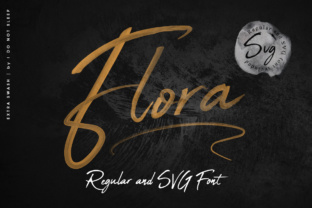
Flora: A Versatile Brush for Creative Workflows
Flora is a stunning brush designed to enhance creative projects across various platforms and software. Whether you're working on graphic design, typography, or digital illustration, Flora offers a unique blend of functionality and aesthetics that can elevate your work. This brush comes in two versions: regular and SVG, making it accessible for a wide range of users and applications.
Understanding Flora and Its Role in Creative Processes
Flora is more than just a brush; it's a tool that integrates seamlessly into different stages of a creative project. From the initial concept to the final output, Flora can be used to add texture, depth, and visual interest to your designs. Its versatility allows it to fit into both digital and traditional workflows, making it an essential addition to any designer's toolkit.
For instance, during the brainstorming phase, Flora can help visualize ideas by adding organic shapes and patterns that inspire further development. In the execution stage, it can be used to refine details and create a cohesive look across multiple elements. After the project is complete, Flora can assist in quality control by ensuring consistency in design elements.
Compatibility and Software Requirements
To fully utilize Flora, it's important to understand the software requirements. The SVG version of Flora requires Adobe Photoshop CC 2017 or Illustrator CC 2018 or newer. These programs offer advanced features that allow for precise control over the brush's properties, making them ideal for complex projects.
If you don't have access to these programs, don't worry. The regular version of Flora doesn't require any special software. It can be used in any application that supports standard fonts, such as Arial. However, keep in mind that some advanced features, like alternate letters and ligatures, may require Opentype-capable software.
Many basic programs now support Opentype features, including Apple’s TextEdit, Pages, Keynote, iBooks Author, and even Microsoft Word. This means that even if you're using simpler tools, you can still take advantage of Flora's full potential without needing to invest in expensive software.
Integrating Flora into Your Workflow
Integrating Flora into your workflow can significantly improve efficiency and creativity. One practical tip is to use Flora during the planning phase of a project. By experimenting with different brush settings and effects, you can get a sense of how it will look in the final product. This helps in making informed decisions early on, saving time and effort later.
During the execution phase, Flora can be used to add unique textures and patterns to your designs. For example, when creating a logo or a poster, using Flora can give your work a distinctive look that stands out from the crowd. It's also useful for adding subtle details that enhance the overall visual appeal of your designs.
After the project is completed, Flora can be used for quality control. By applying it consistently across all elements, you can ensure that your designs maintain a cohesive style. This is especially important in branding and marketing materials, where consistency is key to building recognition and trust.
Practical Tips for Using Flora
To get the most out of Flora, consider the following tips:
- Experiment with settings: Adjust the brush size, opacity, and flow to achieve the desired effect. Different projects may require different settings, so it's worth experimenting to find what works best for you.
- Use layers: When working in software like Photoshop or Illustrator, use separate layers for different elements. This makes it easier to adjust and refine your work without affecting other parts of the design.
- Combine with other tools: Flora can be used alongside other brushes and tools to create more complex and dynamic designs. For example, combining it with a gradient tool can produce rich, layered effects.
Another useful observation is to keep your workspace organized. Having a clear structure for your files and assets can make it easier to locate and apply Flora when needed. This is especially important in large projects where multiple elements are involved.
Long-Term Use and Maintenance
When using Flora over the long term, it's important to maintain its performance and usability. Regularly updating your software ensures that you have access to the latest features and improvements. This can also help prevent compatibility issues that may arise with older versions of the software.
In addition, backing up your work is crucial. Losing a project due to technical issues can be frustrating and time-consuming. By keeping regular backups, you can ensure that your work is safe and recoverable in case of any problems.
Finally, staying informed about new developments and updates related to Flora can help you stay ahead of the curve. Following official channels or community forums can provide valuable insights and tips for maximizing the brush's potential.