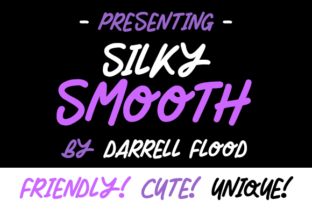
Silky Smooth: A Flowy Font for Elegant Design
Silky Smooth is a unique font that brings a soft, casual feel to any design project. Its freehand style and felt tip appearance give it a handcrafted look that feels personal and inviting. Whether you're designing for a boutique brand or creating something for a special occasion, Silky Smooth adds a touch of warmth and sophistication.
Designed with versatility in mind, Silky Smooth comes in two variations, allowing for flexibility in different creative contexts. The font's fluid lines and gentle curves make it ideal for projects that require a sense of grace and ease. It's not just a font—it's a visual language that speaks to the heart of your message.
What Makes Silky Smooth Stand Out?
Silky Smooth has a distinct personality that sets it apart from other fonts. Its handwritten quality gives it a natural, organic feel, making it perfect for brands that want to convey authenticity and approachability. Unlike rigid, structured typefaces, Silky Smooth feels more like an artist's signature than a standard font.
The font's casual style works well in both digital and print formats. Whether you're creating social media graphics, packaging designs, or editorial layouts, Silky Smooth adapts effortlessly. Its smooth strokes and consistent weight create a harmonious visual rhythm that enhances readability without sacrificing style.
One of the key strengths of Silky Smooth is its ability to blend modern typography with traditional craftsmanship. This makes it a great choice for designers looking to add a touch of elegance to their work while maintaining a contemporary edge.
Where Silky Smooth Shines
Silky Smooth excels in applications where a personal, intimate feel is desired. It’s particularly effective for product labels, wedding invitations, and branding materials that aim to evoke a sense of care and attention. Its flowing lines make it ideal for logos, headers, and titles that need to stand out without being overwhelming.
In packaging design, Silky Smooth can help differentiate a product on the shelf. Its casual yet refined style appeals to consumers who value both aesthetics and substance. For small businesses, this font can be a powerful tool in building a recognizable brand identity.
When used in web design, Silky Smooth adds a human element to digital content. It works well for blog titles, call-to-action buttons, and feature sections where a friendly, approachable tone is important. However, it's best to use it sparingly in body text to maintain clarity and readability.
How Silky Smooth Influences Design and Branding
Choosing the right font is crucial for effective communication. Silky Smooth can influence how your audience perceives your brand. Its warm, flowing style often evokes feelings of comfort, creativity, and sincerity—qualities that resonate well with many target audiences.
For brand consistency, Silky Smooth can serve as a key element in your design system. When paired with other fonts, it helps create a cohesive visual identity that reinforces your brand’s message. However, it's important to test different pairings to ensure they complement each other without clashing.
Readability is a key consideration when using Silky Smooth. While it's highly legible at larger sizes, it may not be the best choice for long blocks of text. Use it for headings, subheadings, and short phrases to maintain clarity while still benefiting from its aesthetic appeal.
Practical Tips for Using Silky Smooth
If you're considering using Silky Smooth in your next project, start by evaluating how it fits with your overall design goals. Ask yourself: Does this font align with the tone and message of my brand? Will it enhance or distract from the content?
Testing different font pairings is essential. Pair Silky Smooth with a clean, modern sans serif for contrast, or with a classic serif for a more traditional look. Experiment with weights and styles to find the right balance for your project.
Before finalizing your design, review the font’s commercial licensing terms. Make sure you have the appropriate rights for your intended use, whether it's for a personal project, a client’s business, or a public campaign.
Finally, consider the context in which the font will be used. For example, if you're designing for a luxury brand, Silky Smooth might need to be paired with more refined elements to match the brand’s tone. In contrast, for a craft or handmade product, it could be the perfect fit on its own.
Real-World Applications of Silky Smooth
Many small businesses have successfully used Silky Smooth in their branding. From artisanal coffee shops to boutique clothing lines, the font has helped create a cohesive and memorable visual identity. Its casual yet polished look makes it ideal for brands that want to feel both authentic and professional.
Designers often use Silky Smooth for editorial projects, such as magazine covers or book titles, where a personal touch is valuable. It also works well in social media graphics, where a friendly, engaging tone is key to capturing attention and building a connection with the audience.
For those working on love-related themes, such as weddings or romantic products, Silky Smooth offers a subtle but meaningful way to express emotion through typography. Its elegant flow complements heartfelt messages and creates a lasting impression.